
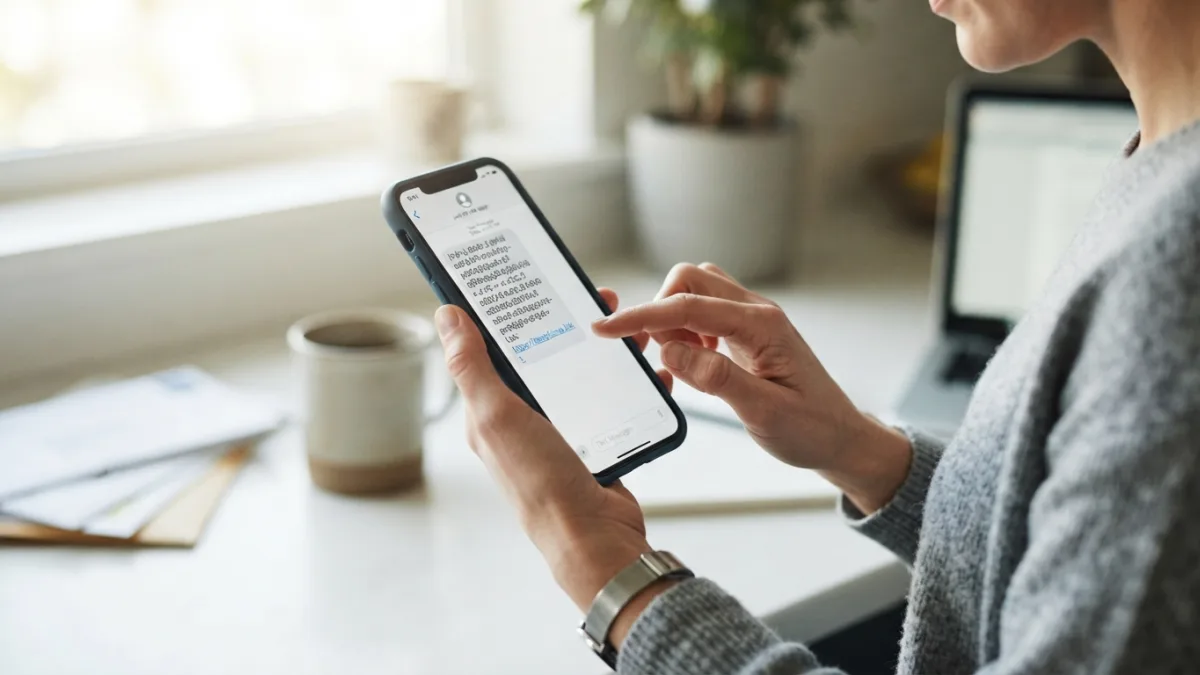
How to Spot a Fake Delivery or Package Scam Text
Your phone buzzes with a text saying your package is “on hold” and needs your attention right away. It looks legitimate, complete with a tracking link and a familiar courier name. But there’s a good chance you’re looking at a fake delivery scam text designed to steal your personal information or money. These messages have become one of the most common forms of phishing text message scams in recent years, and they’re only getting more convincing as scammers refine their tactics.
Package delivery scams work because they exploit something almost everyone does now: online shopping. With so many of us expecting boxes on our doorsteps every week, a text about a delayed or undeliverable package doesn’t raise many eyebrows. Scammers know this, and they’ve built entire operations around mimicking real shipping notifications from companies like USPS, FedEx, UPS, and Amazon. The goal is simple. They want you to click a link, enter your information, or pay a small “redelivery fee” that opens the door to much bigger financial damage down the road. If you want to dig deeper, our guide on How to Stay Safe Using Public Wi-Fi covers this in more detail. This is a common part of dealing with fake delivery scam text, and it is worth keeping in mind.
What Is a Fake Delivery Scam Text?
A fake delivery scam text is a fraudulent message pretending to come from a shipping company or retailer, warning you about a problem with a package. It might claim your item is stuck in customs, that nobody was home for delivery, or that an address needs to be confirmed. These texts almost always include a sense of urgency and a link you’re pushed to click immediately. This type of fraud falls under a broader category called smishing, which is essentially phishing carried out through SMS text messages rather than email. Because text messages feel more personal and immediate than emails, people tend to trust them more, which is exactly why scammers have shifted so much effort toward this channel. Many people run into this exact issue with fake delivery scam text at some point.
Common Warning Signs of a Package Delivery Scam
Spotting these scams gets easier once you know what to look for. Scammers tend to rely on the same handful of tricks, and once you recognize the pattern, the messages start looking far less convincing. Here are the most common red flags: Keeping fake delivery scam text in mind here will save you time later on.
- Urgent or threatening language that pressures you to act within a few hours or risk losing your package
- Generic greetings like “Dear Customer” instead of your actual name
- Slightly off sender numbers or ones that come from a regular ten-digit phone number rather than a short business code
- Spelling and grammar mistakes, including odd capitalization or missing punctuation
- Requests for payment to release a package, especially through gift cards or unusual payment apps
- Links that don’t match the real company website when you hover over or examine them closely
Any one of these signs alone might not mean much, but seeing two or three together is a strong indicator you’re dealing with a scam. This connects closely with another common issue — see How to Fix Common Error Codes You See on Your Screen for more on that. This detail matters more than it seems once fake delivery scam text comes up again.
How to Spot a Scam Text Before You Click Anything
The safest habit you can build is pausing before you tap any link in a text message, no matter how official it looks. Ask yourself whether you’re actually expecting a package around that time. If you didn’t order anything recently, that alone should raise suspicion. Next, check the sender’s number. Legitimate shipping notifications usually come from short codes, not standard phone numbers with area codes. Look closely at the wording too. Real companies rarely word things awkwardly or misspell basic terms like “delivery” or “package.” If something feels slightly off, trust that instinct. Scammers are counting on you to react quickly without thinking it through, so slowing down for even ten seconds can be the difference between staying safe and handing over your information. It is one of those small things that makes fake delivery scam text easier to manage overall.
The Danger of a Fake Tracking Link
One of the most dangerous elements of these scams is the fake tracking link itself. These links often lead to websites that look almost identical to real shipping company pages, complete with logos, color schemes, and layouts copied directly from the originals. Once you land on the page, you might be asked to “verify your address” by entering your name, home address, and even payment details to cover a supposed redelivery fee. Some fake tracking links go a step further and install malware on your device the moment you click, without you entering anything at all. This is why security experts consistently advise against tapping links in unexpected texts, even if the message claims to be time-sensitive or urgent. This is a common part of dealing with fake delivery scam text, and it is worth keeping in mind.
Real Delivery Companies vs. Scam Texts
It helps to understand how real shipping companies typically communicate, since scammers rely on you not knowing the difference. Legitimate carriers rarely ask for payment information through text messages, and they don’t usually demand personal details to “unlock” a delivery. The table below breaks down some key differences to watch for. You might also find our article on How to Tell If a Website Is Legit Before You Enter Your Card Details helpful here. Many people run into this exact issue with fake delivery scam text at some point.
| Feature | Legitimate Delivery Text | Fake Delivery Scam Text |
|---|---|---|
| Sender | Short code or verified business number | Random phone number, often from an unfamiliar area code |
| Tone | Neutral, informative | Urgent, pressuring, sometimes threatening |
| Links | Official domain matching the company name | Misspelled or unusual domain, shortened link |
| Payment requests | Rarely, if ever, requested via text | Frequently asks for a small fee or gift card |
| Personal info requested | Minimal, usually just confirming an existing order | Full name, address, card number, sometimes Social Security number |
What to Do If You Receive a Suspicious Text
If a delivery text feels off, don’t click anything inside it. Instead, open your carrier’s official app or website directly and check your order status there using the tracking number you already have on file. This way, you’re relying on a source you trust rather than a link someone sent you. It’s also smart to report the message. Most phone carriers let you forward suspicious texts to a short code, commonly 7726 (which spells “SPAM”), so it can be investigated. You can also report it to the Federal Trade Commission through their website. After reporting, delete the message and block the number to avoid follow-up attempts, since scammers sometimes send a second or third message if the first one goes unanswered. Keeping fake delivery scam text in mind here will save you time later on.
Protecting Yourself From Smishing Text Scams Long Term
Beyond handling individual suspicious messages, there are habits that lower your overall risk of falling for a smishing text scam. Keep your phone’s operating system and messaging apps updated, since updates often patch security holes scammers try to exploit. Consider enabling spam filtering features that many carriers now offer for free. Be cautious about where you share your phone number online, since data leaks and marketplace listings are common sources scammers use to build target lists. It’s also worth talking to older family members about these scams specifically, since they’re often targeted more aggressively and may be less familiar with how convincing these fake texts have become. A five-minute conversation can prevent a costly mistake later. This detail matters more than it seems once fake delivery scam text comes up again.
What Happens If You Already Clicked
If you’ve already tapped a suspicious link, don’t panic, but do act quickly. First, avoid entering any information if a page opened and asked you for it. If you already typed in personal or payment details, contact your bank or card issuer immediately to flag potential fraud and consider freezing your card. Change passwords on accounts that might share the same login details, especially email and banking apps. Run a security scan on your device in case malware was installed. Finally, keep an eye on your bank statements and credit report over the following weeks, since fraudulent charges don’t always show up immediately. Acting fast limits the damage and gives you a much better chance of reversing any unauthorized transactions. For a related walkthrough, check out How to Choose Between iPhone and Android in 2026. It is one of those small things that makes fake delivery scam text easier to manage overall.
Package delivery scams aren’t going away anytime soon, especially as online shopping continues to grow and scammers get better at mimicking real companies. The good news is that these texts almost always share the same weaknesses: urgency, small errors, and requests that legitimate companies simply don’t make. Once you train yourself to notice those patterns, a fake delivery scam text becomes much easier to identify at a glance. Staying a little skeptical of unexpected texts, especially ones asking you to click something right now, remains one of the simplest and most effective ways to protect your personal information and your money. This is a common part of dealing with fake delivery scam text, and it is worth keeping in mind.
Frequently Asked Questions
How can I tell if a delivery text is really from UPS, FedEx, or USPS?
Check whether you’re actually expecting a package, then go directly to the carrier’s official app or website to verify tracking information instead of clicking any link in the text. Real carriers rarely ask for payment or personal details through SMS. Many people run into this exact issue with fake delivery scam text at some point.
What should I do if I already clicked a fake tracking link?
Avoid entering any personal information on the page that opens. If you already did, contact your bank right away, change relevant passwords, and run a security scan on your device to check for malware. Keeping fake delivery scam text in mind here will save you time later on.
Why do these scam texts feel so urgent?
Scammers use urgency on purpose because it pushes people to act before they think things through carefully. Pausing for even a few seconds before clicking anything is one of the best defenses. This detail matters more than it seems once fake delivery scam text comes up again.
Can I report a fake delivery scam text?
Yes. Most mobile carriers let you forward suspicious texts to 7726 (SPAM), and you can also file a report with the Federal Trade Commission online. Reporting helps track and shut down these campaigns. It is one of those small things that makes fake delivery scam text easier to manage overall.
Do these scams only target people who shop online often?
No. Scammers send these texts in bulk to random phone numbers, hoping to catch people who happen to be expecting a package around that time. Anyone with a phone number can receive one, regardless of their shopping habits.
One Comment
Comments are closed.